
How to Remove Stubborn Tea Stains from Glass & Porcelain Teapots Naturally
Dissolve polymerized tea tannins (thearubigins) from glass and glazed ceramic teapots in 15 minutes using sodium percarbonate, baking soda, or citric acid—no bleach.

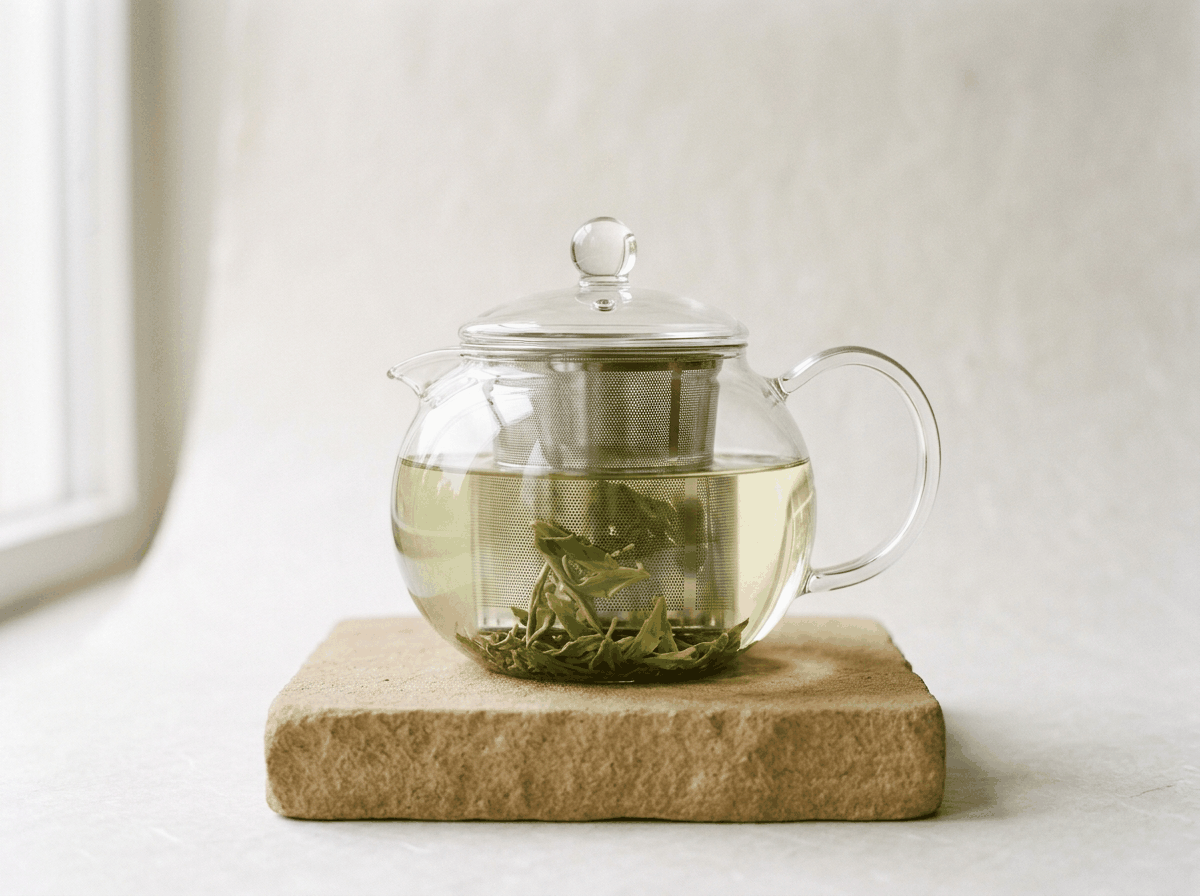
Hario ChaCha Kyusu Maru 700ml
Best for:Crystal-clear visual brewing with wide hand-reach access for zero-effort rinsing
Borosilicate Glass · 700 ml (23.7 oz)
- Japanese heatproof borosilicate glass tolerates rapid boiling pours cleanly
- Extra-wide mouth opening accommodates a full hand and soft sponge easily
- Deep stainless steel strainer sits low for small solo infusions as well as full pots
Nothing dims the quiet pleasure of watching rolled oolong leaves unfurl inside a clear glass teapot quite like an amber tea ring stubbornly clinging to the walls—or creeping brown streaks winding up the spout of an ivory porcelain teapot. Even worse, reaching for standard dish soap and scrubbing until your wrist aches barely makes a dent in aged mahogany film.
Learning how to remove tea stains effectively without chlorine bleach or micro-scratching your glaze comes down to five minutes of straightforward kitchen chemistry. Whether your pot hosts a faint golden haze from daily sencha or years of dark Assam buildup, food-grade pantry ingredients dissolve polymerized tannins cleanly in about 15 minutes flat.
The Chemistry of Tea Stains: Why Dish Soap Fails
Tea stains look simple, yet dish soap bounces right off them because they are neither grease nor trapped food particles. When boiling water hits Camellia sinensis leaves, water-soluble polyphenols—especially catechins in green tea and oxidized theaflavins and thearubigins in black and oolong teas—steep out into your cup.
On their own, those pigments rinse away easily. The trouble begins when polyphenols meet dissolved calcium and magnesium ions floating in hard municipal tap water—or when leftover tea sits cooling inside the pot for hours. Exposed to oxygen, tea polyphenols cross-link with mineral cations to form an insoluble calcium-polyphenol biofilm that locks firmly into microscopic surface valleys along glass and porcelain glaze.
Dish soap relies on surfactants engineered to surround dietary fats and oils. Because tea biofilms contain almost zero lipid content, detergent suds slide helplessly over the brown layer. To clean tea stains effortlessly, you need one of three targeted chemical actions: oxygen cleavage of the pigment bonds, mild alkaline mechanical polishing, or acidic descaling if chalky limescale sits underneath.
(Before cleaning unglazed clay or cast iron, pause—those materials follow entirely different rules in our complete teapot care guide.)
Three Natural Stain-Removal Methods Ranked by Strength
Pick the gentlest method that matches the buildup inside your vessel:
| Method | Active Chemistry | Best For | Soak Time | Scrubbing Needed? | Safe on Gold Trim? |
|---|---|---|---|---|---|
| 1. Sodium Percarbonate | Alkaline carbonate + active hydrogen peroxide | Heavy brown buildup, narrow spouts, fine steel infuser mesh | 15–20 min | Virtually none | No (can dull overglaze luster) |
| 2. Baking Soda Paste | Mild alkali (pH ~8.3) + Mohs 2.5 micro-polish | Everyday rings, stained lid rims, vintage metallic-trim porcelain | 2–5 min | Light fingertip or soft sponge buff | Cautiously (avoid rubbing gilt edge directly) |
| 3. Citric Acid Soak | Organic tri-carboxylic acid calcium chelation | White chalky hard-water crust trapping dark tea pigment | 20 min | Light swirl | Keep below gilt rim line |
Method 1: Sodium Percarbonate (The 15-Minute No-Scrub Oxygen Soak)
If you want your borosilicate pot to look factory-new without lifting a scrub brush, pure sodium percarbonate (often sold simply as unscented oxygen stain remover or coffee-equipment cleaner—verify the label lists only sodium percarbonate with zero optical brighteners or fragrance) is the gold standard.
How It Works Chemically
When dissolved in hot water above 50°C (122°F), solid sodium percarbonate splits cleanly into two benign compounds: sodium carbonate (washing soda, raising water pH around 10.5 to loosen phenolic hydrogen bonds) and hydrogen peroxide. Free oxygen species cleave the dark light-absorbing double bonds inside polymerized thearubigins, turning dark mahogany film colorless and releasing it into suspension—all with zero chlorine smell.
Step-by-Step 15-Minute Oxygen Protocol
- Place Infuser Inside: Drop your removable stainless steel strainer basket directly into the teapot so both vessels get refreshed simultaneously.
- Add Granules: Measure 1 level teaspoon of food-grade sodium percarbonate for a 500ml to 800ml pot (or 1.5 teaspoons for a 1-liter carafe).
- Pour Hot Water: Slowly fill the teapot near the brim with hot water around 65°C to 75°C (150°F to 167°F). You will immediately hear gentle effervescent fizzing as microscopic oxygen bubbles lift stains off the wall and percolate through infuser mesh holes.
- Leave Lid Off: Do not clamp an airtight silicone lid down tightly while oxygen off-gasses; simply rest a flat lid upside-down or leave the pot uncovered.
- Soak 15 Minutes & Rinse Thoroughly: After 15 minutes, swirl once, pour the dark tinted water down the drain, and rinse twice with hot running water until glass and ceramic squeak cleanly beneath your fingertips.
Clara’s Safety Note: While sodium percarbonate is food-safe after rinsing and leaves zero toxic residue on glass or vitrified porcelain, never use it on raw unglazed Yixing or Tokoname clay, aluminum kettles, cast iron exteriors, or antique teacups painted with delicate overglaze gold leaf.
Method 2: Baking Soda Paste (Targeted Mechanical Polish for Glaze & Glass)
Have a stubborn localized ring on a favorite mug or faint staining inside a porcelain teapot decorated with delicate metallic trim? Skip full soaking and reach for ordinary pantry baking soda (sodium bicarbonate).
Why Baking Soda Never Scratches Glass or Porcelain
Mineral abrasives follow the Mohs hardness scale. Steel wool sits around 4.5, and harsh quartz-based scouring powders jump to 7—high enough to etch microscopic haze onto glossy ceramic glaze over months of scrubbing. Baking soda crystals measure roughly 2.5 on the Mohs scale, far softer than borosilicate glass (5.5–6.5) and vitrified porcelain glaze (6–7). That means baking soda mechanically buffs away brittle organic tannin films while gliding harmlessly over intact glaze.
Step-by-Step Baking Soda Polish
- Dampen the inside of your cooled teapot with warm water and pour out excess puddles.
- Sprinkle 1 tablespoon of baking soda onto a damp soft cotton cloth or non-scratch cellulose sponge (never use harsh green scouring pads).
- Rub gently in circular strokes across amber tea lines, around the inner lid lip, and beneath the spout base—you will feel gritty resistance melt away smoothly within 30 seconds as tannins lift into gray-brown paste.
- Rinse thoroughly under warm water and wipe dry with clean linen.
Why You Should Never Combine Baking Soda and Vinegar
Social media cleaning hacks frequently instruct readers to dump baking soda and white vinegar together into a stained teapot for extra fizzing power. Chemically, combining an acid (vinegar) and a base (baking soda) merely produces an instantaneous foaming reaction that yields water, carbon dioxide gas, and neutral sodium acetate—canceling out the alkaline lift of baking soda and the acidic descaling power of vinegar at the exact same moment. Always apply them separately for their distinct purposes.
Method 3: Citric Acid Soak (When You Need to Descale a Teapot First)
Sometimes a hazy tan film lingers even after a baking soda polish. Hold your dried glass pot up toward a window: if you see milky white speckles or cloudy horizontal waterlines under the amber color, you are looking at trapped tea tannins embedded inside hard-water mineral scale.
To clear both layers cleanly, you must descale teapot minerals first (or right after lifting surface oil) using food-grade citric acid:
- Stir 1 tablespoon of citric acid crystals into 500ml of warm-to-hot water (around 60°C / 140°F) until fully dissolved.
- Pour into your stained glass or glazed ceramic teapot, tilting gently so solution fills the lower spout throat.
- Let stand for 20 minutes—citrate ions chelate stubborn calcium and magnesium carbonate bonds cleanly without vinegar’s lingering sour fumes.
- Pour out, rinse twice with fresh hot water, and follow with a quick 10-minute sodium percarbonate bath if dark polyphenol traces remain underneath.
For deeper descaling schedules across stoneware, stainless kettles, and filter screens, bookmark our pillar teapot cleaning and descaling master guide.
How to Clean Impossible Spouts, Strainer Holes, and Crackled Glaze
The main chamber of a teapot rarely causes real frustration; it is the hidden curves where brushes cannot turn cleanly that turn dark over time.
Cleaning Curved Gooseneck & Traditional S-Shaped Spouts
- The Submerged Stockpot Trick: Place your entire glass or plain glazed porcelain teapot gently sideways inside a clean stainless steel stockpot lined at the bottom with a folded cotton dishcloth (to protect against rattling). Fill the stockpot with warm water plus 2 tablespoons of sodium percarbonate, wait 20 minutes while oxygen solution fills every millimeter inside the spout, then thread a flexible narrow nylon spout brush upward from the pouring tip to sweep loosened flakes away.
- The Cork-Plug Alternative: If your teapot sits upright, wrap a small food-grade silicone bottle stopper or rolled strip of plastic wrap snugly over the outer spout tip, fill the entire pot past the spout waterline with hot oxygen solution, wait 15 minutes over the sink, and unplug cleanly.
Clearing Clogged Built-In Porcelain Strainer Holes (Drip-Free Flow)
Traditional ceramic pots often use perforated clay holes punched directly across the inner base of the spout instead of removable metal baskets. Tea dust and calcium buildup slowly choke those small holes, ruining pour laminar flow and causing messy spout drips. Every month, soak the pot upright in hot sodium percarbonate, then slide a thin wooden bamboo skewer or soft interdental brush gently through each drainage hole from the inside out—never jam metal pins or toothpicks aggressively, which can chip raw ceramic edges.
Handling Crazed Glaze & Antique Gold-Rimmed Porcelain
Fine spiderweb crackle lines (crazing) inside older stoneware or vintage English porcelain absorb dark black tea over decades. While deep craze tinting adds heirloom patina many collectors admire, an unhurried 25-minute warm soak in mild sodium percarbonate lightens dark lines safely without thermal cracking. Just check the exterior rim first: keep gold leaf, platinum rims, and hand-painted overglaze enamels strictly dry, or stick solely to gentle hand-rubbed baking soda paste on the lower interior well.
(Curious how cast iron handles tannins very differently—using green tea polyphenols intentionally to prevent rust? Read our cast iron teapot seasoning and rust care guide.)
Easy-to-Clean Glass & Porcelain Teapots Worth Owning
The simplest cure for chronic spout stains is starting with smart vessel geometry. Wide-mouth openings, removable deep baskets, and smooth vitrified finishes cut cleaning time to seconds after every steep. Two standout designs in our curated teapot gallery prove how thoughtfully engineered teaware stays effortless:
- Hario ChaCha Kyusu Maru 700ml: Crafted from ultra-clear Japanese borosilicate glass, its generously wide mouth welcomes an entire hand and soft sponge cleanly down to the base, while its deep steel basket traps fine green-tea needles before they migrate into the spout.
- Sweese Fluted Glazed Porcelain Teapot: Glazed inside and out with dense, bright white vitrified porcelain, black tea tannins wipe straight off with plain hot water—and when life gets busy, the sturdy porcelain vessel drops seamlessly into a gentle top-rack dishwasher cycle.
Remember that timing your brew carefully with our interactive tea steeping timer keeps over-extracted bitter tannins out of both your cup and your pot walls—leaving you with sweeter infusions and gleaming teaware after every pour. Ready to explore stain-resistant designs or compare daily thermal trade-offs? Browse our curated teapot design roundup or check our complete teapot materials comparison.
Hands-On Benchmarks
Tested Picks & Recommendations
Hario ChaCha Kyusu Maru 700ml
Borosilicate Glass · 700 ml (23.7 oz)
Best ForCrystal-clear visual brewing with wide hand-reach access for zero-effort rinsing
What We Loved
- Japanese heatproof borosilicate glass tolerates rapid boiling pours cleanly
- Extra-wide mouth opening accommodates a full hand and soft sponge easily
- Deep stainless steel strainer sits low for small solo infusions as well as full pots
Trade-offs
- Thin glass cools faster than stoneware or iron during leisurely sessions
- Curved pouring spout still benefits from periodic warm oxygen-cleaner soaking
Sweese Fluted Glazed Porcelain Teapot
Glazed Porcelain · 800 ml (27 oz)

Best ForHigh-tannin black teas and daily pots where non-porous glaze stays bright
What We Loved
- Smooth vitrified porcelain glaze sheds dark polyphenol films effortlessly
- Dishwasher-safe porcelain body and removable steel infuser simplify weekly upkeep
- Generous handle stays comfortable even when filled with near-boiling water
Trade-offs
- Fluted outer grooves look best when buffed dry with a clean linen towel
- Heavier than minimalist glass vessels when pouring one-handed
Frequently Asked Questions
How do I clean tea stains inside a narrow teapot spout I cannot reach?
Plug the tip of the spout from the outside using a clean silicone wine stopper or rolled damp cloth wedged gently into a small bowl, or submerge the entire glass or glazed porcelain teapot inside a large stockpot filled with hot water and two teaspoons of sodium percarbonate. The active oxygen solution travels freely through the spout neck, dissolving dark polymerized tannins in 15 minutes before a soft narrow spout brush sweeps everything clear.
What is the difference between hard-water mineral scale and tea stain film?
Hard-water scale is an inorganic crust of white or grayish calcium and magnesium carbonate left behind by boiled tap water; it feels slightly chalky and requires an acid such as citric acid to dissolve. Tea stain film is an organic amber-to-mahogany coating formed when oxidized tea polyphenols (thearubigins) cross-link with water minerals; it responds fastest to alkaline oxygen cleaners like sodium percarbonate or gentle baking soda polishing.
Are food-grade oxygen cleaners like sodium percarbonate safe for teapots?
Yes, pure unscented sodium percarbonate is completely safe on borosilicate glass, glazed porcelain, glazed stoneware, and stainless steel mesh infusers. When dissolved in hot water, it breaks down cleanly into sodium carbonate (washing soda), water, and oxygen—leaving no chlorine fumes, endocrine-disrupting surfactants, or lingering perfume. Just avoid using it on aluminum parts, unglazed porous clay, or hand-painted metallic gold trim.
Should I mix baking soda and vinegar together to clean tea stains?
No. Combining baking soda (a mild base) with vinegar (acetic acid) triggers a brief fizzing reaction that neutralizes both cleaners into sodium acetate, water, and carbon dioxide gas—eliminating their cleaning power. Instead, use citric acid alone when you need to descale mineral buildup, and use baking soda or sodium percarbonate separately when you want to lift dark organic tea tannins.
Can I remove dark stains inside vintage crackled or crazed porcelain glaze?
You can significantly lighten stained crazing lines in glazed porcelain using a warm (not boiling) soak of sodium percarbonate for 20 to 30 minutes, followed by thorough rinsing. Avoid thermal shock or harsh abrasive powders on antique crazed pottery, and keep gold-leafed or overglaze metallic rims away from prolonged oxygen soaking so decorative trim stays intact.
Care & Physics
Related Guides in This Cluster
How to Clean, Descale, and Maintain Every Type of Teapot
A material-by-material protocol to clean, descale, and preserve glass, porcelain, raw Zisha clay, Tokoname stoneware, and cast iron teapots without ruining patina.

Can You Put a Glass Teapot on an Electric or Gas Stove Safely?
Safety guide to heating borosilicate glass teapots on gas, electric coil, glass-ceramic, and induction cooktops—avoiding thermal shock and shatter risks.
How to Season a Cast Iron Teapot (And Prevent Inside Rust)
Learn how to season raw Nanbu Tekki tetsubin kettles versus enamel-lined cast iron teapots, neutralize flash rust with green tea tannins, and dry properly.